Lynette
Noughts & CrossesLynette, often called Lynny by her younger brother Callum, is an older sister whose withdrawal follows an attack rooted in the racial order of the novel. Her family’s attempt to protect her by hiding the truth also keeps Callum and Jude from understanding her changed life. When Lynette briefly calls for her lost boyfriend, Jed, the past breaks through the silence: she is not simply distant from her family, but living with the consequences of violence and a rupture that no one has been able to repair.
Identity and Family Background
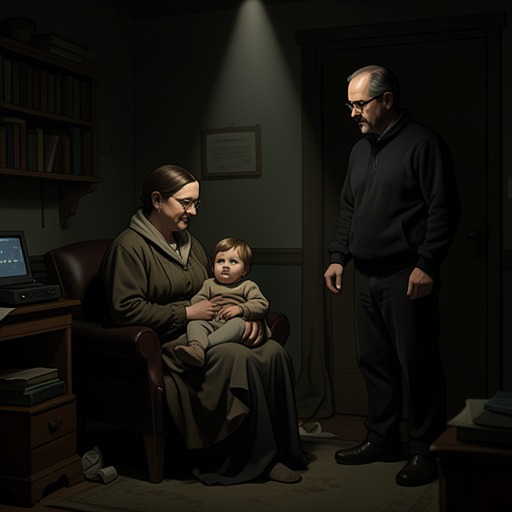
Lynette is twenty and has brown hair and grey eyes, resembling Callum rather than either parent. Callum remembers her as the sister who looked after him when their mother had to work; their likeness and shared closeness made their bond different from his relationship with Jude. In the family’s present, however, Lynette is often quiet and turned inward, sitting with her attention fixed on her lap. Callum describes her as living in a world her family cannot enter, a stark contrast with his memory of the sister who once cared for him.
The family’s language about Lynette reflects their limited understanding of her condition. Callum says that something happened three years earlier and changed her, while other family members refer to her episodes as turns. Those descriptions register a change visible to them, but do not explain its cause. The explanation comes only when their father finally tells the children about the attack and the lie that followed it.
The Attack and Its Concealment
Three years before the family confrontation, Lynette and Jed were attacked by three or four Nought men. Her father says that Jed was nearly beaten to death and that Lynette was injured badly enough to remain in hospital for more than two weeks. The evidence establishes a violent racist attack and its lasting aftermath; it does not make Lynette’s later condition a simple or complete account of her experience.
The adults concealed the truth from the children. At around the same time as the attack, Lynette was away from home, and Callum had been told she had gone to care for a sick Aunt Amanda. Their parents acknowledge that they said what they had to say, while explaining that Lynette had begged them not to tell the family what had really happened. Secrecy therefore begins as a response to Lynette’s request, but it also leaves her brothers without the knowledge needed to understand why she has changed.
Moments of Recognition
For much of the story, Lynette’s responses are slight and difficult for her family to interpret. When Callum speaks to her at the table, she looks up and gives him a brief smile before lowering her gaze again. On another evening, she nods when he asks if she is all right, but a slow frown appears. Anxious that she may be entering one of her episodes, Callum tries to reach her through a shared memory: her taking him to his first film for his seventh birthday and telling him he could blink. His appeal draws on their former closeness, even as the scene shows how uncertain contact between them has become.
A more startling change comes during an argument with Jude. Lynette shouts back at him for the first time, while their father tries to keep the siblings apart. Jude’s lip is bleeding, and the exchange interrupts the family’s accustomed pattern of her withdrawal and his frustration. Her words do not by themselves explain what she has endured, but her forceful response makes it impossible to treat her as wholly absent from the conflict around her.
The argument also prompts their father to act in a way that shocks both brothers: he slaps Jude and demands that he stop judging Lynette without knowing what she has been through. When Callum asks about her absence years earlier, he learns the truth about Jed and the attack. The disclosure changes the meaning of Lynette’s prolonged withdrawal and reveals that the family’s silence, although tied to her plea, has allowed Jude’s misunderstanding to harden.
Jed and the Return of the Past
After the truth is disclosed, Lynette breaks a mirror and cuts her palms. Looking first at her blood and then at her reflection, she seems unable to recognize either. She asks her father, “Where’s Jed, Daddy?” He tells her Jed went away a long time ago and offers to clean her hands. The question makes the loss present again: in a moment of confusion, Lynette reaches for the boyfriend who was attacked with her and is no longer there.
Her father’s answer does not settle her. Lynette pulls her hands away, turns them over, and looks at him; the distant, peaceful expression her family knows is gone. The scene offers no simple recovery or explanation of what she understands. Instead, it places the concealed attack, the absent Jed, and the family’s efforts to care for her in one encounter, where her altered relation to her own reflection marks the depth of the rupture.
Narrative Significance
Lynette’s history is disclosed through family memory and delayed revelation rather than through a full account from Lynette herself. Callum first sees the effects—her silence, lowered gaze, and moments of recognition—and only later learns what the adults hid. This structure makes the family’s attempts to interpret her behavior part of the story: affection and concern coexist with incomplete knowledge, while Jude’s irritation is exposed as judgment formed in ignorance.
Her experience also connects private family life to the novel’s racial hierarchy. The attack was committed by Nought men against Lynette and Jed, and its consequences continue long after the assailants have disappeared from the family’s account. Lynette is not simply a symbol of violence: the remembered sister who cared for Callum, the young woman who responds to Jude, and the daughter who searches for Jed remain distinct within the limited glimpses the story gives her. The gap between that remembered closeness and her present distance is one of the clearest measures of what the attack has taken from the family.